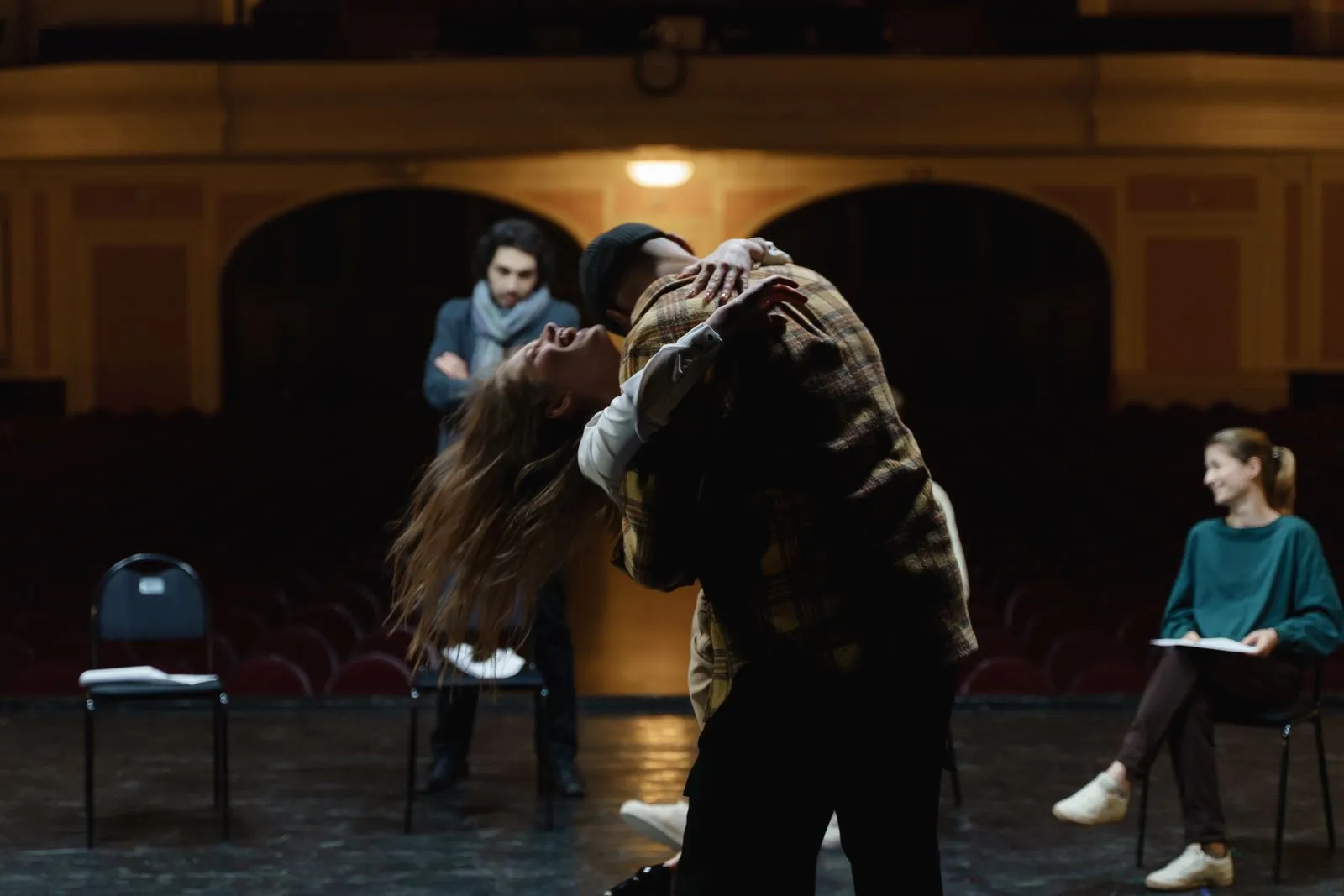
Voice and movement training helps performers use their whole body to communicate. Instead of treating speech, posture, and gesture as separate skills, classes connect them so words carry clearly and movement supports the scene. You can expect focused exercises, repetition, and feedback—not a requirement to arrive with polished technique. Whether you are new to classical theatre or building on prior experience, the work gives you practical ways to prepare, stay present, and make deliberate choices onstage.
Start With Breath
Breath supports both speech and physical effort. In training, you may practice noticing where your breath moves, releasing unnecessary tension, and taking a quiet, comfortable breath before speaking. The goal is not to force a bigger sound. It is to give your voice steady support so a line remains clear through a longer phrase or a demanding scene.
Breathing exercises can also help you respond to the moment instead of rushing through text. Try reading a short passage aloud, marking natural thought breaks, and taking a relaxed breath before each new idea. If you feel lightheaded or strained, stop and return to normal breathing; exercises should not require pushing past discomfort.
Make Every Word Clear
Articulation is the precise shaping of sounds. Actors work with consonants, vowels, pace, and phrasing so an audience can follow the words without hearing artificial over-enunciation. A class may use tongue and lip warmups, repeated phrases, or text spoken at different speeds to reveal where sounds blur or tension gets in the way.
Practice with a short line from a play. Say it slowly while keeping your jaw and tongue easy, then repeat it at a conversational pace without dropping the ends of words. Focus on communicating the thought rather than performing each sound separately. Clear delivery should feel connected to meaning, not like a pronunciation drill.
Build Useful Posture
Stage posture is about readiness, balance, and freedom of movement—not holding a rigid pose. Training can help you notice habits such as locked knees, raised shoulders, or a head pushed forward. A comfortable alignment gives your breath room and makes it easier to turn, gesture, and shift focus without unnecessary effort.
A simple check-in can help before rehearsal: place your feet securely, let your knees stay unlocked, and notice whether your shoulders can soften. Then speak a line and move a few steps while keeping your attention on your scene partner or objective. Adjust only what improves ease and clarity; posture should serve the action, not distract from it.
Move With Awareness
Physical awareness means noticing how you use space, energy, and gesture. In class, you might walk at different tempos, change direction on a cue, or repeat a scene with one movement choice adjusted. These exercises help you recognize habits and make movement specific, so a gesture or stillness has a clear relationship to the character and moment.
You can apply the same attention to a scene by tracking where you stand, when you move, and what changes your choice. Keep pathways safe and leave room for other performers. At Jackson Stage School in Jackson, voice and movement work can support classical text by connecting physical choices with the rhythm and meaning of the language.
Voice and movement training gives actors practical tools for breathing steadily, speaking clearly, standing with ease, and moving intentionally. These skills develop through attentive repetition, useful feedback, and choices tied to the scene. Bring a short passage or movement question to your next class, and ask how you can make one performance choice clearer and more connected.